In the shadowy understory of the shores around Southeast Alaska and Pacific Northwest’s ancient forests, where mossy giant trees loom and the air is moist with rain, a remarkable plant weaves its way through the thickets. Devil’s Club stands as one of the region’s most iconic and misunderstood botanical inhabitants. This plant has long been valued for its striking beauty and inherent danger.
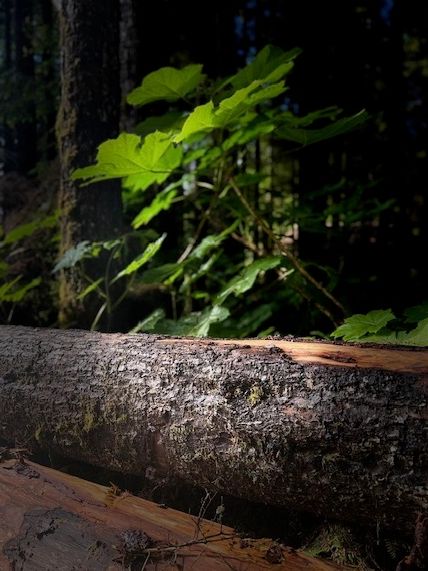
Devil’s Club is a large, woody shrub native primarily to the temperate rainforests of Alaska, British Columbia, the Yukon, and the Pacific Northwest. It thrives in moist, shaded environments, often growing along streams and on forested slopes.
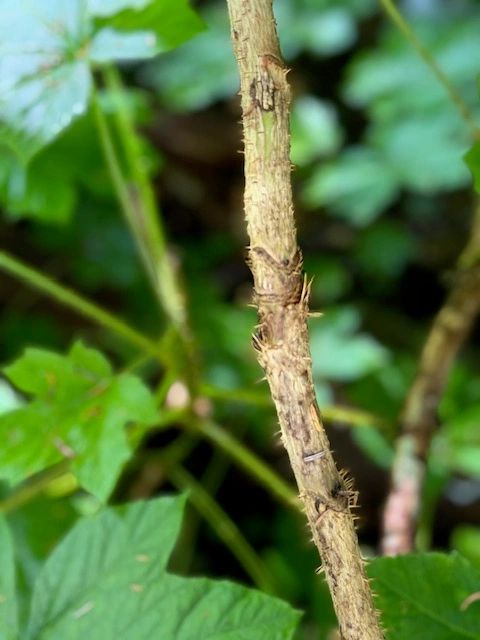
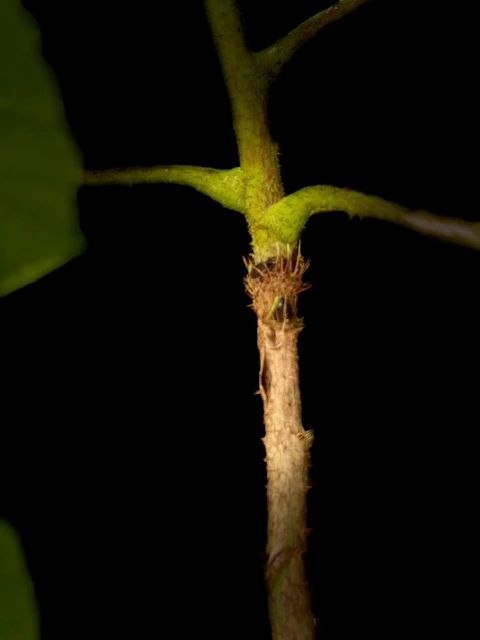
Rising impressively from the forest floor, Devil’s Club can reach heights of up to 10 feet, its singular stalks crowned with broad, maple-like leaves that may span over a foot across. Every inch of stem and leaf stalk is armored with sharp, yellowish spines—nature’s warning sign to any creature with intentions of browsing or handling.
Plant of Many Names and Stories
The English moniker “Devil’s Club” hints at the plant’s intimidating defenses, but the indigenous peoples of the northwestern forests have known it by many other names. In Tlingit, it is called “S’axt,” and in the Haida language, “Xáadas.” To these communities, Devil’s Club is much more than a spiny nuisance; it is a plant of power, medicine, and deep cultural significance.
Folklore abounds, some believe that the plant’s thorns act as a barrier against evil spirits, while others tell tales of it being used as a protective talisman. Even today, some people hang its branches above doorways, believing it wards off misfortune. (Levine, Ketzel, 2004)
Traditional and Medicinal Uses
Across the Pacific Northwest some have incorporated Devil’s Club into their daily lives. Healers and knowledge keepers understood the plant’s properties in ways only now being fully appreciated by modern science.
The inner bark of the roots and stems is harvested (with great care), dried, and used for a variety of ailments. Decoctions and tinctures made from Devil’s Club have been used traditionally to treat ailments ranging from arthritis and digestive complaints to colds, tuberculosis, and even diabetes. Its application as a poultice for wounds, sores, and skin infections is well documented.
Some traditions, believe, Devil’s Club is used as a pain reliever, sometimes as a substitute for or complement to more familiar botanicals like ginseng. The plant’s berries, though toxic to humans, are a food source for some animals, and the stout, spiny stalks have occasionally been crafted into tools or implements.
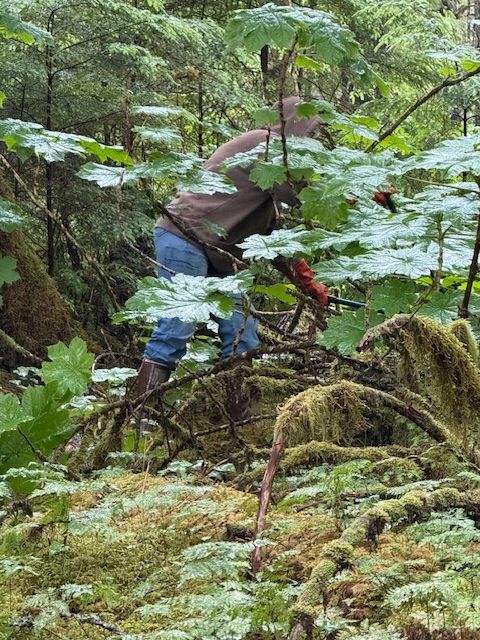
It’s important to note that harvesting Devil’s Club is not undertaken lightly. The plant’s population can be easily damaged by overharvesting, and traditional practices emphasize respectful, sustainable gathering.
Botanical Features and Growth Habits
Devil’s Club belongs to the Araliaceae family, which also includes ginseng. It is characterized by:
Spiny Stems: Stems are covered in sharp, brittle spines, which can break off in the skin and cause irritation or infection if not handled properly.
Large Leaves: The leaves are palmately lobed, resembling those of a maple, and create a lush, umbrella-like canopy in summer.
Clusters of Berries: In late summer, Devil’s Club produces clusters of brilliant red berries. Though visually striking, these berries are considered toxic to humans and should not be consumed. The berry is inedible to humans. Touching the spiny plant may cause irritation. (Turner, Mark; Kuhlmann, Ellen (2014))
Slow Growth: The plant propagates primarily through rhizomes (underground roots), often forming dense thickets over many years. It’s not uncommon to find groves of Devil’s Club that have persisted for decades—some believed to be ancient “clones” connected beneath the soil.
Ecological Importance
Devil’s Club is an integral part of the northern forest ecosystem. Its dense growth provides shelter for small animals and birds. The berries, while unsuitable for human consumption, are devoured by birds such as thrushes and bears, especially as a late-summer food source.
Its presence is often an indicator of a healthy, undisturbed forest—a sign that the natural balance is intact.
Devil’s Club in Modern Herbalism and Science
Interest in Devil’s Club has surged in recent years, as herbalists and researchers explore its potential benefits. Some studies suggest that it contains compounds with anti-inflammatory, anti-tubercular, and even anti-cancer properties. (Inui T, Wang Y, Deng S, Smith DC, Franzblua SG, Pauli GF (Jun 1, 2000)). Extracts are sometimes made in to salves, teas, and supplements marketed for immune support or pain relief.
However, caution is warranted. Devil’s Club can be toxic and spines pose a risk of infection, and its powerful chemistry demands respect.
Harvesting and Stewardship
For those fortunate enough to encounter Devil’s Club in the wild, it’s vital to approach with caution. Harvesting is best left to those with traditional knowledge or proper training. Only small amounts should be taken from robust stands, and never from solitary plants.
Remember: Admire from a distance and resist the temptation to touch!
Devil’s Club embodies the wild, untamable spirit of the northern rainforests. At once a protector, and healer, it commands respect from all who cross its path. For indigenous peoples, botanists, and hikers alike, this plant is a reminder of nature’s power, resilience, and generosity—if only we take the time to notice and honor it.
Next time you wander into the cool, green brush of a Pacific Forest, pause beneath the dappled light you’ll find not only the history of a remarkable plant, but also the tales of people, place, and the enduring wisdom of the wild.
 Alaska Dreams Soap Bar & Alaska Dreams Lotion Stick - Gift Set
1 × $19.75
 Alaska Dreams Soap Bar & Alaska Dreams Lotion Stick - Gift Set
 Alaska Gold Beard Balm & Soap Gift Set
 Alaska Dawn Soap Bar & Alaska Dawn Push Up Stick - Gift Set
 Alaska Sasquatch Handcrafted Bar, Cedarwood Essential Oil Soap
 Alaska Dawn Handcrafted Soap, Lavender Essential Oil
 Alaskan Happy Beard Balm - Bear Valley - 1.5 oz
 Alaskan Happy Beard Balm - Alaska Gold - 1.5 oz
 Alaskan Bug Rub Balm - Repellent
 Alaskan Bug Repellent Spray
 Alaskan Happy Beard Balm - Alaska Sasquatch - 1.5 oz
 Alaskan Bug Repellent Set - 4 oz Spray and 1 oz Tin
 Alaskan Happy Beard Balm - Moose Valley - 1.5 oz